

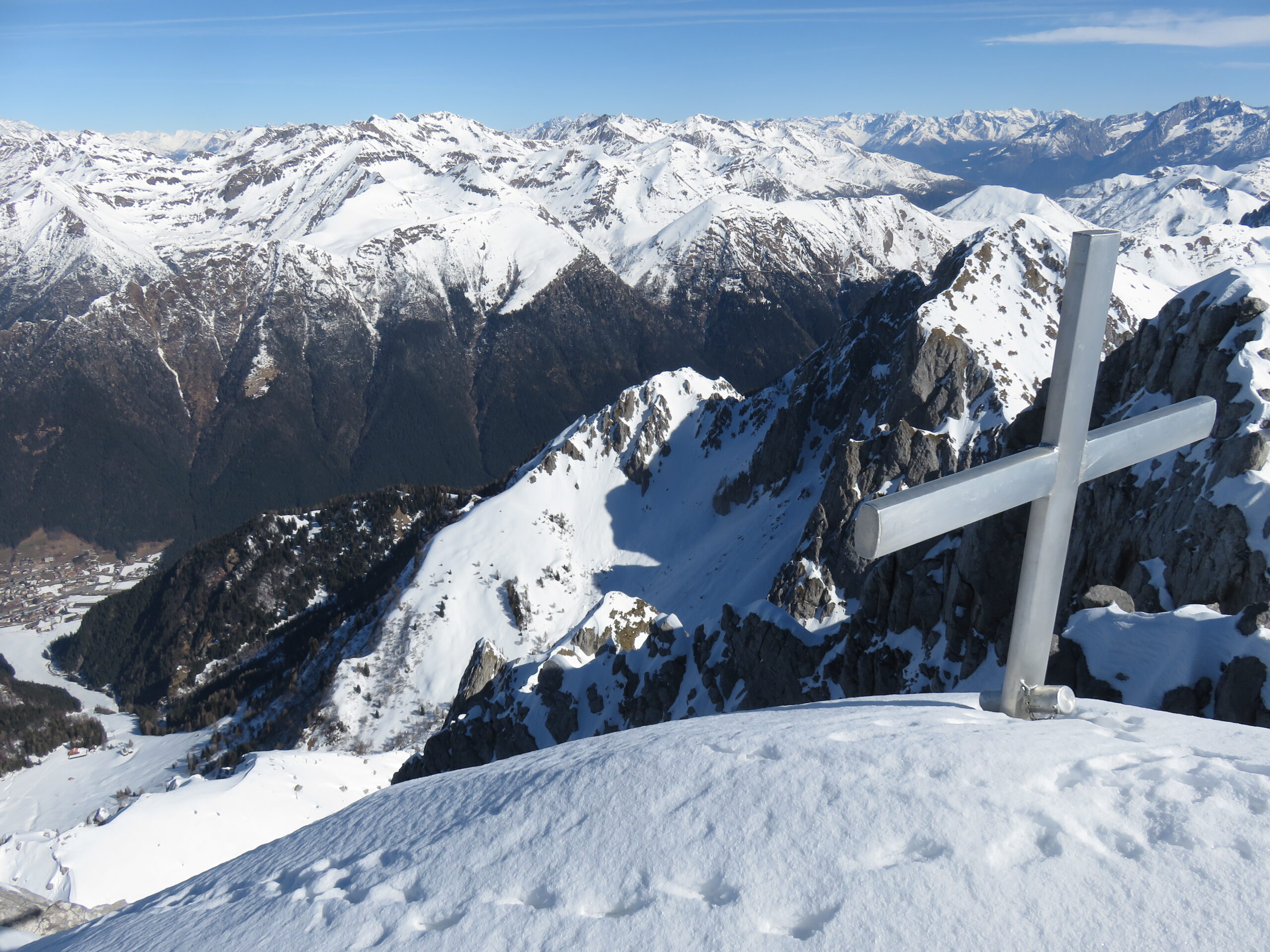
Pizzo Camino and Corna Buca
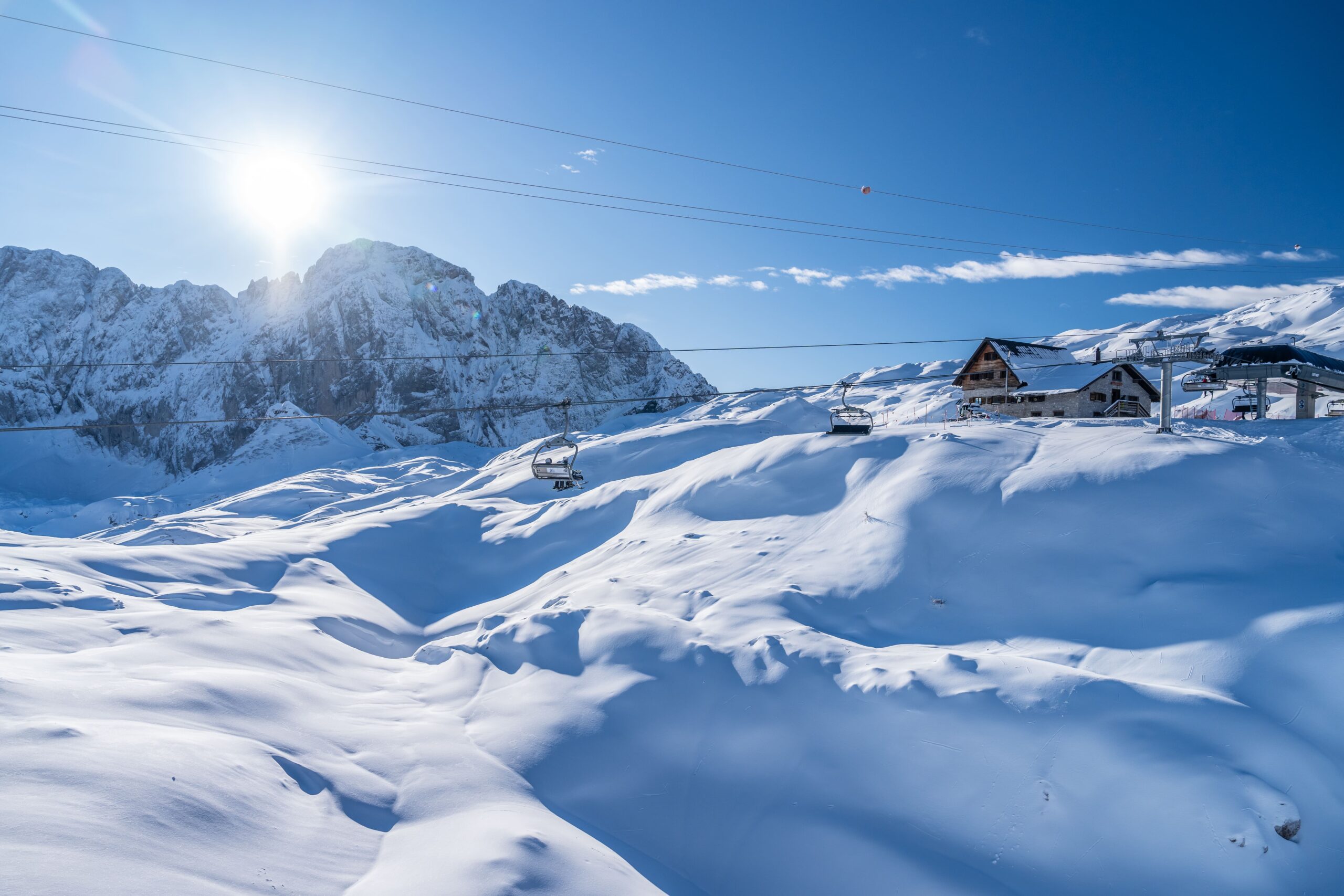
A scenic winter itinerary in Schilpario. The ascent to Pizzo Camino is recommended only for experienced mountaineers, while the route to Corna Busa is also accessible with snowshoes.
Technical data
Difficulty: Schilpario-Corna Busa: medium Schilpario-Pizzo Camino: difficult
Elevation gain: Schilpario-Corna Busa 870m Schilpario-Pizzo Camino: 1300m
Estimated time: Schilpario-Corna Busa 3/4 hours Schilpario-Pizzo Camino: 5/6 hours
Starting point
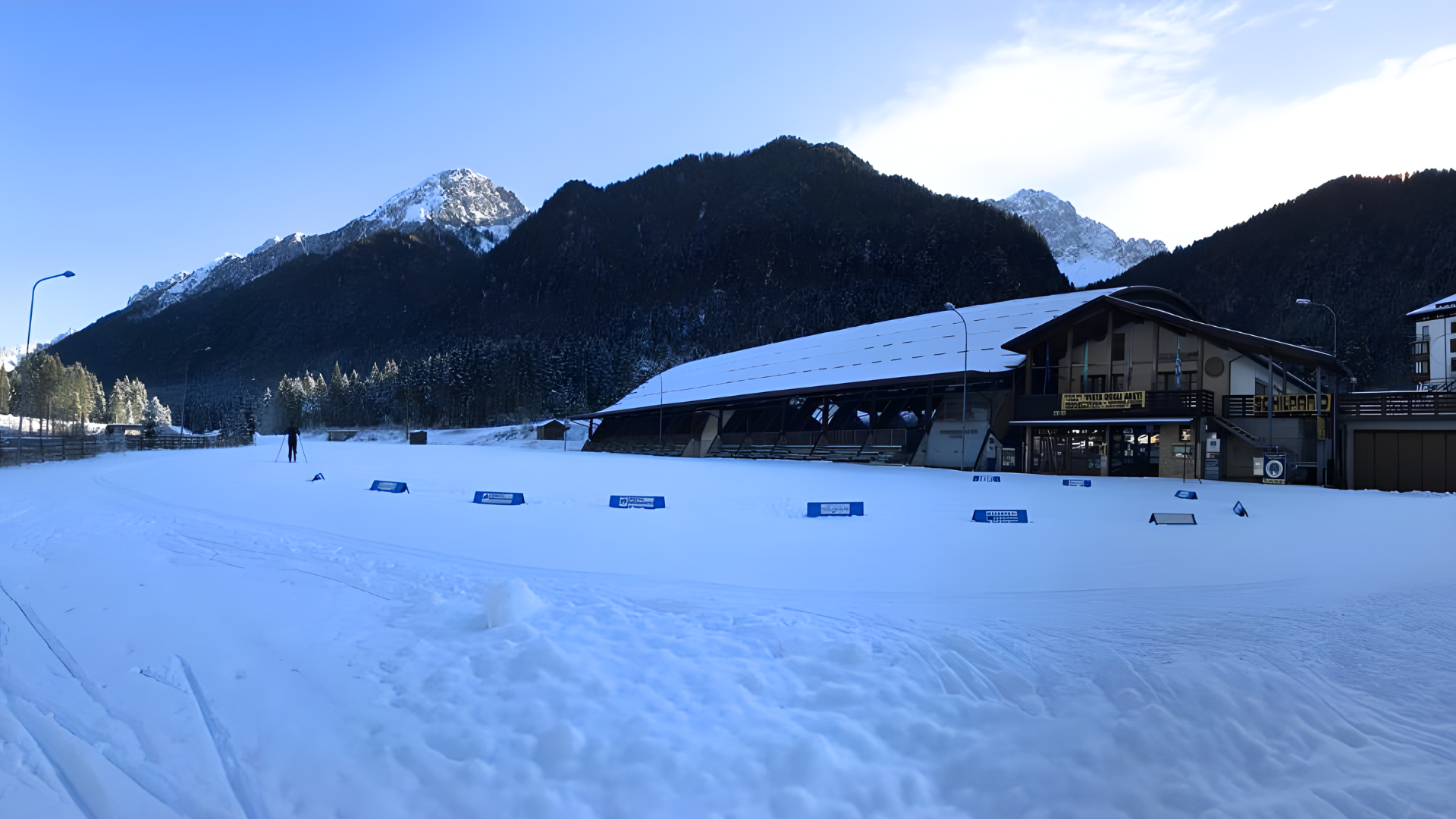
You can leave your car at the Alpini parking lot in Schilpario. The parking area is very spacious and free of charge. Parking location
Route
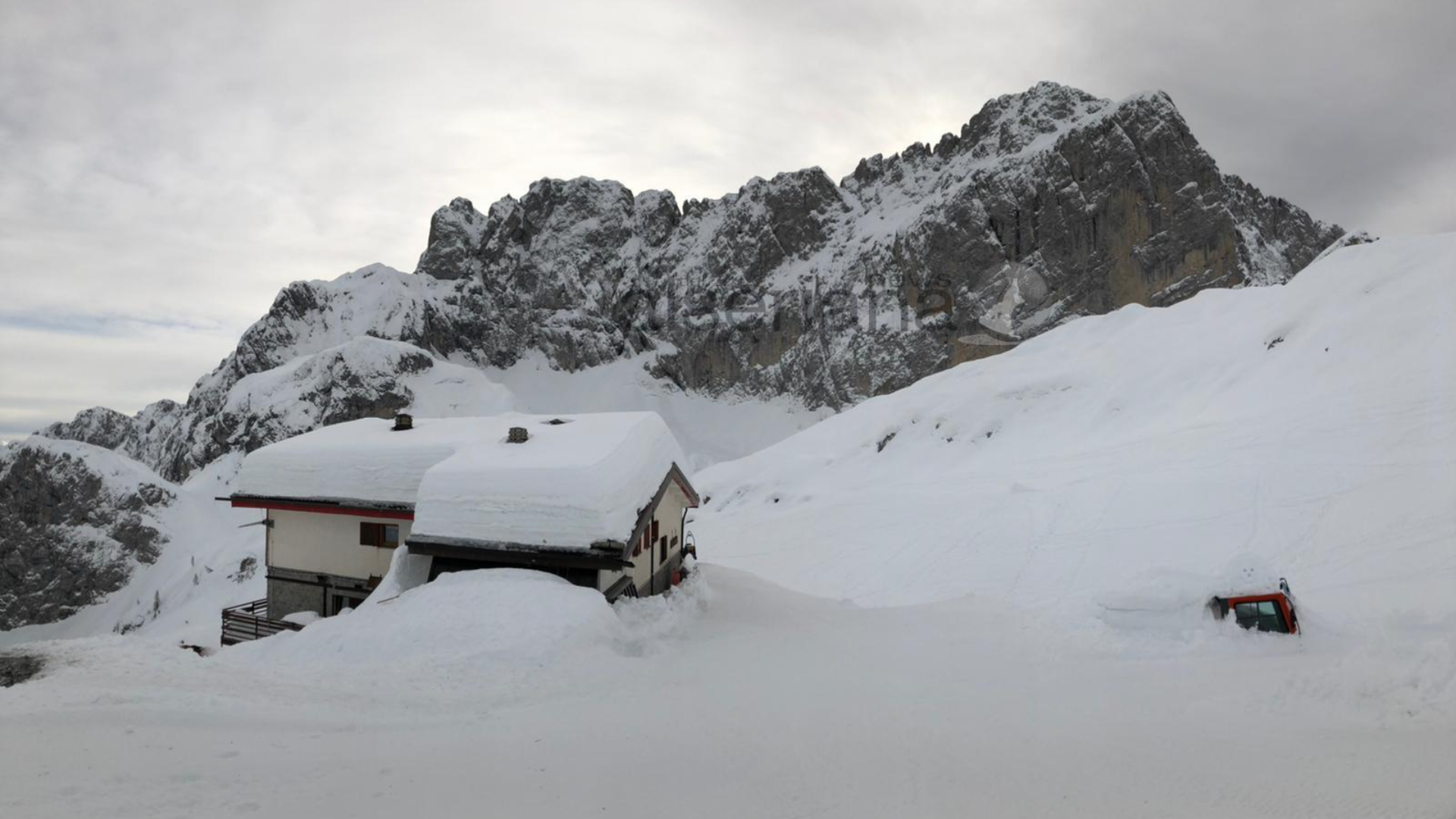
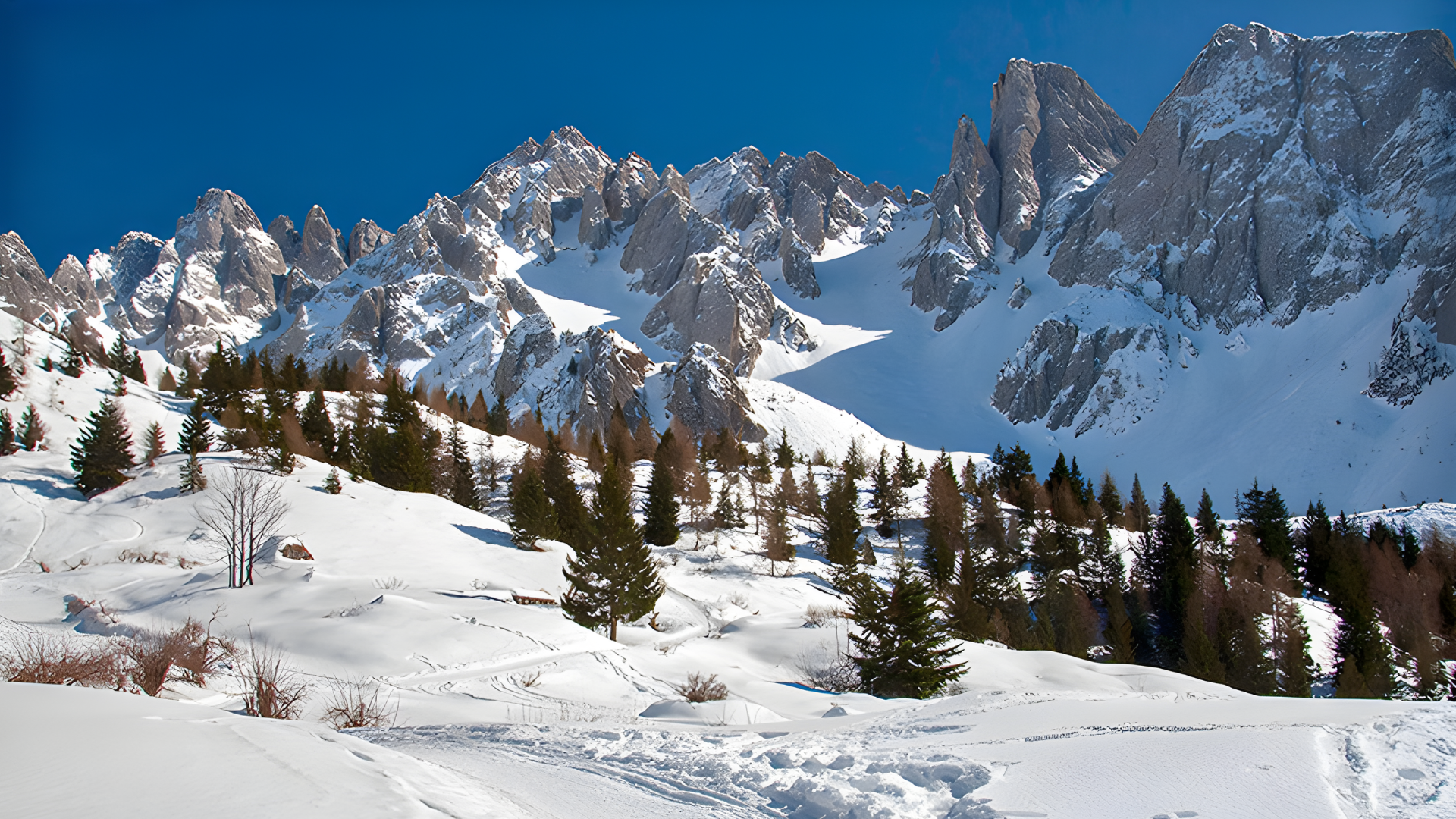
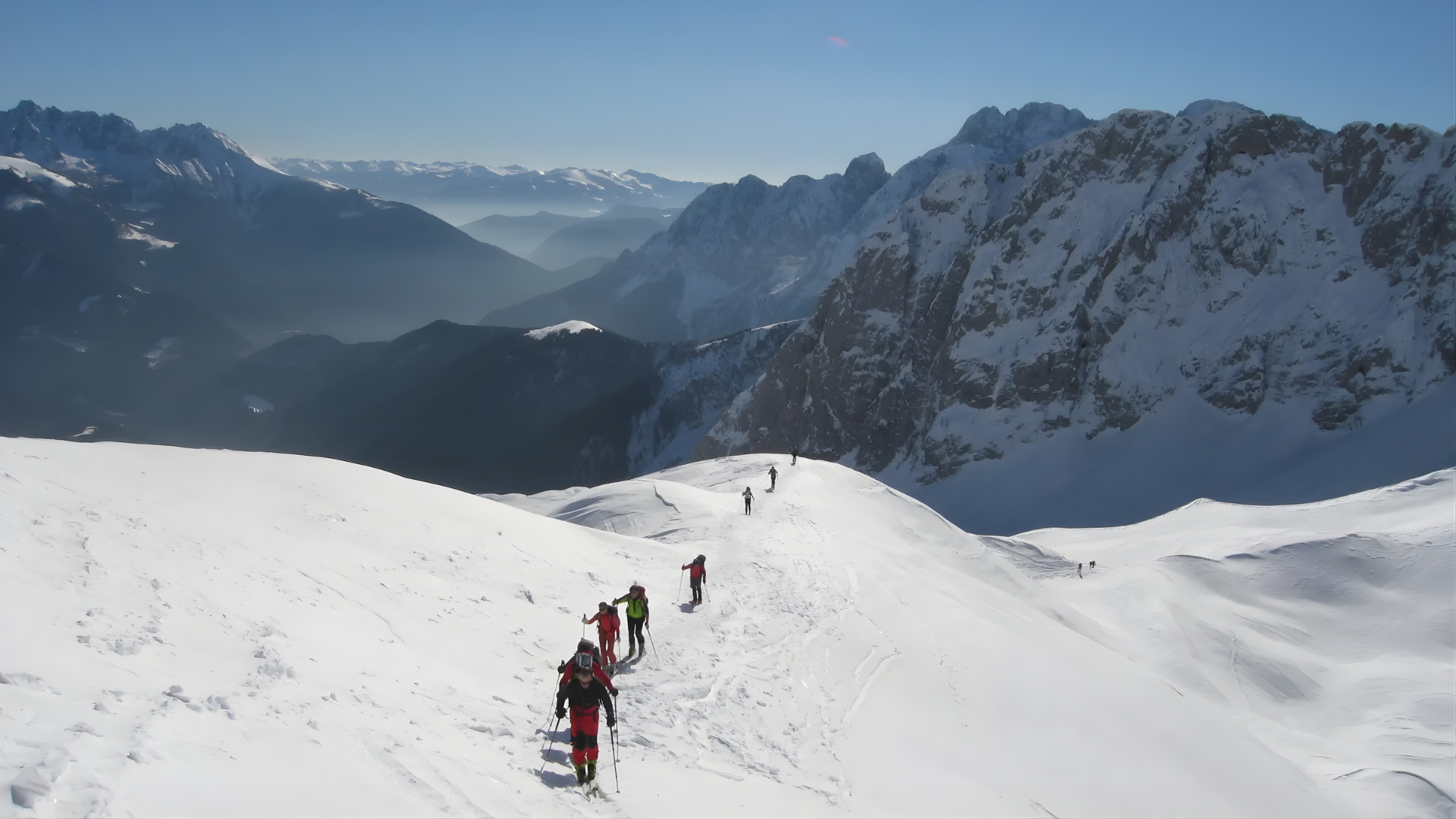
Leave the car in the large parking lot (1100 m a.s.l.) and reach the start of the mule track leading to Malga di Voglia (C.A.I. 423). This first section follows a cemented mule track through a mostly wooded area. Once you reach and pass the two Voglia huts (after about two hours of walking), you will catch a distant view of the Corna Busa pass (or Corna Buca). We recommend stopping here to admire the rock formations and the stunning view of the valley, as well as Pizzo Camino. This marks the end of the first section for snowshoers and less-experienced ski mountaineers.

From here, descend slightly to the left and, via a long diagonal, bypass a rocky spur at the base of the western slopes of Pizzo Camino. You will reach the Fopponi basin (1900 m).
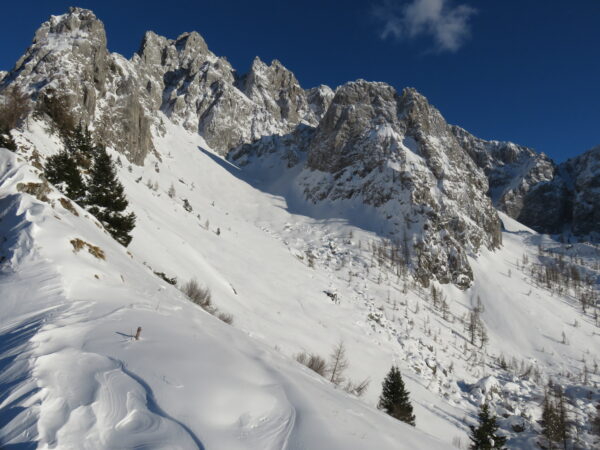
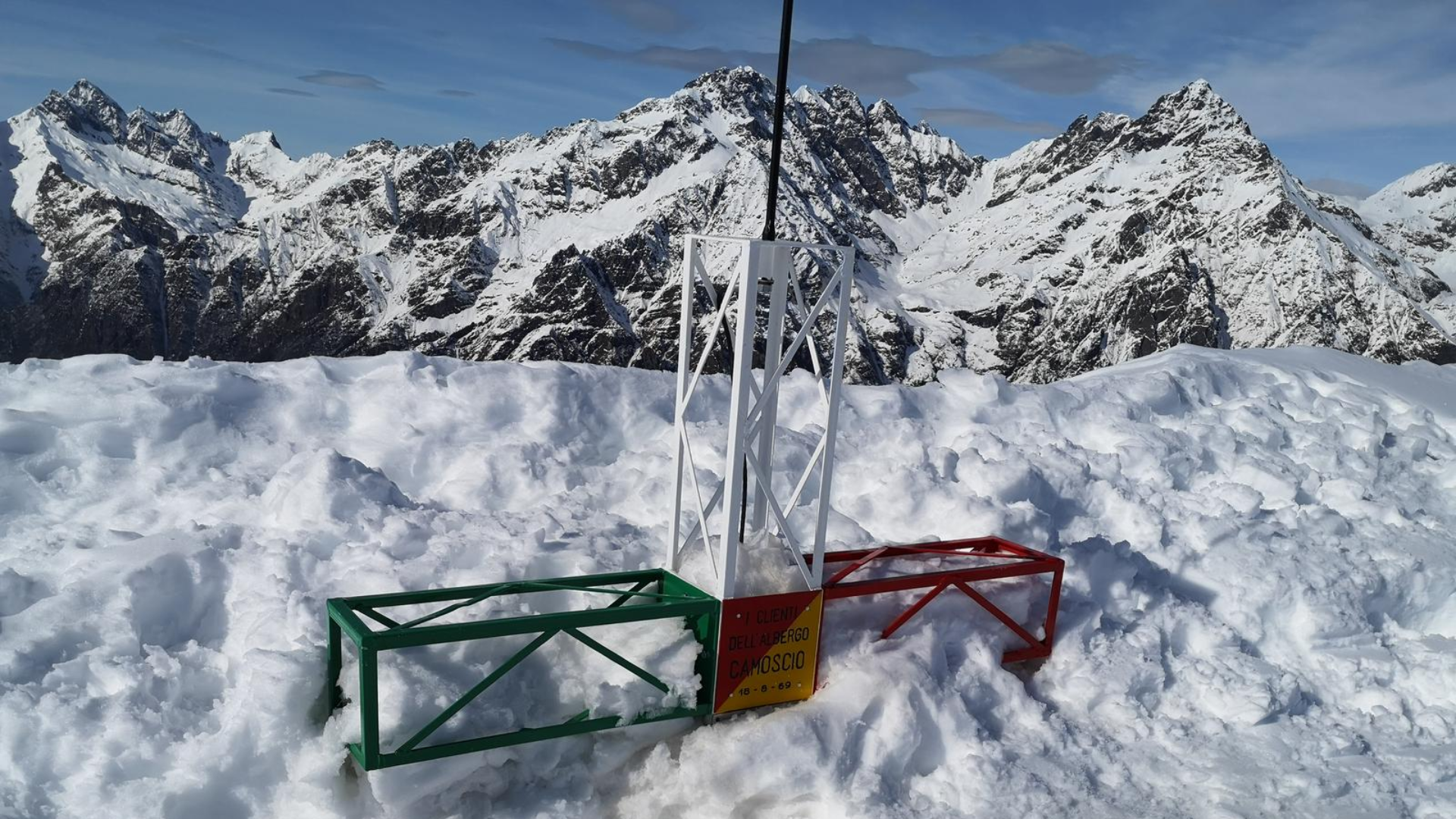
Leaving your skis behind, continue ascending the narrow and steep gully leading to the ridge, from which you will soon reach the summit (2491 m).
Descent
For the descent, there are two options: retrace the same route used for the ascent, or, once at Epolo, descend along the old ski slopes and then return to Schilpario from there.
Snowshoers
The route is suitable for snowshoers up to the Corna Busa pass. The technical difficulty of the second part of the route makes it unsafe and dangerous, especially in certain periods of the year.
Mountain activities always involve risks. Always evaluate your preparation before attempting a ski mountaineering route, and for safety, contact the local tourist offices or CAI to get information on snow and trail conditions. If you are ski mountaineering, carrying a probe, shovel, and avalanche transceiver (ARTVA) is mandatory. Also, check the snow and avalanche bulletin.
Maps and Downloads