

History of the Gleno Dam
The Construction of a “One-of-a-Kind” Dam
The Fraterna Viganò Company
The dam was commissioned privately by the Galeazzo Viganò Company – officially known as Fraterna Viganò – a family-run enterprise from Ponte Albiate (Triuggio, Milan), whose wealth came from large cotton mills.
The company wanted direct access to electricity to power its facilities, instead of purchasing energy from utility companies, which were proliferating during the early industrial development period.
The Project
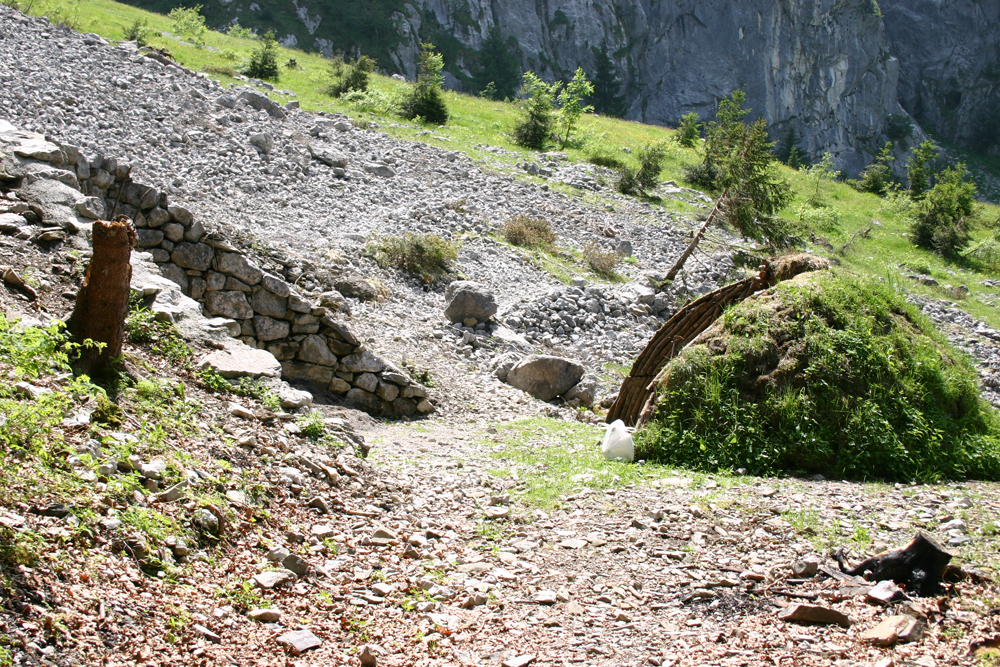
The plan was to construct a dam at 1500 meters above sea level at Pian di Gleno, a green pasture surrounded by some of the highest peaks in the Val di Scalve, including Monte Gleno and Pizzo Tre Confini (both over 2800 m).
After several applications and project proposals starting from 1907, in 1916 the Viganò Company received the concession from Engineer Gmür.
The original project was a gravity dam, where water from the Povo stream would drop 400 meters to a power plant near Bueggio, then continue to the Valbona plant after another descent to the valley floor.
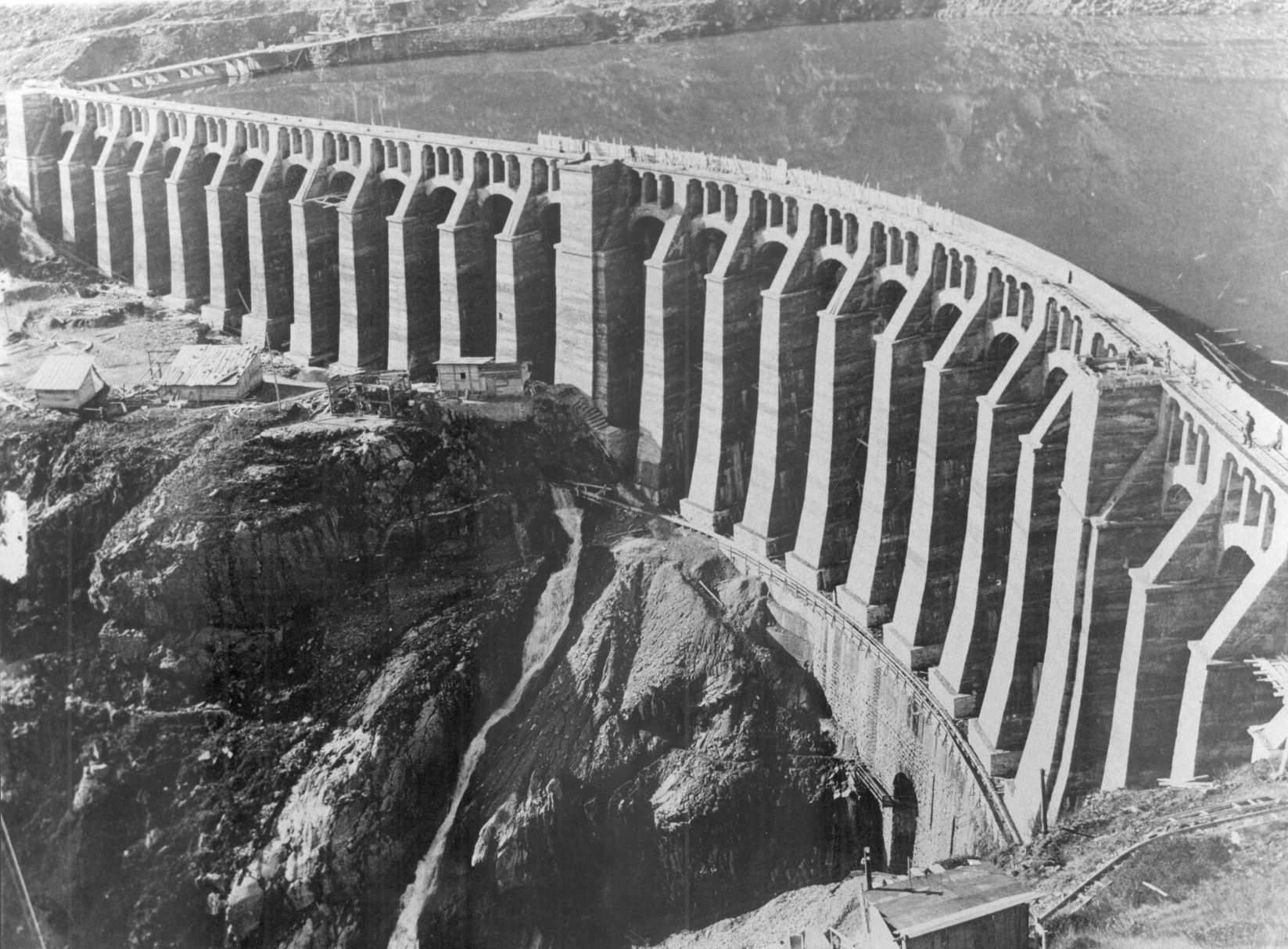
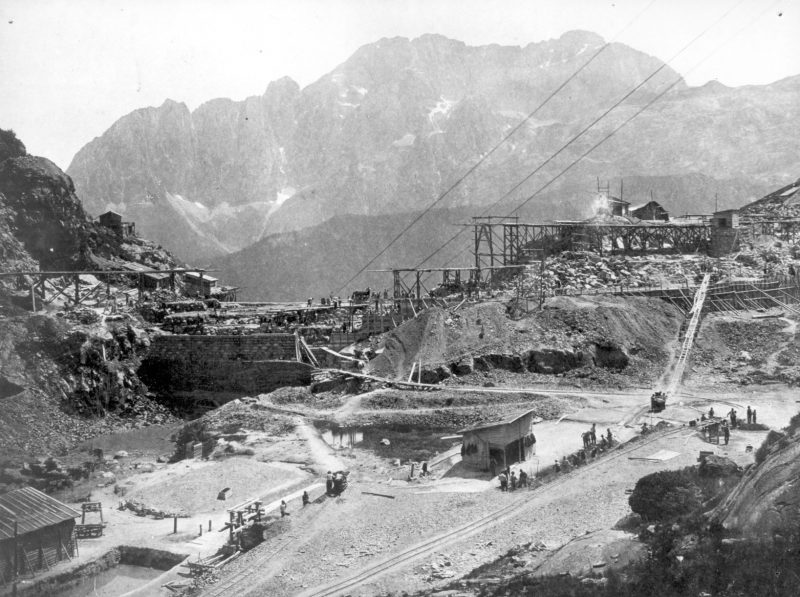 Construction of the central plug – Gleno Archive
Construction Work
Between 1917 and 1918, auxiliary works such as canals, roads, and cableways began.
In October 1918, Michelangelo Viganò, who had been overseeing the project on behalf of the family, passed away. His brother Virgilio took over until the tragic outcome.
After submitting the executive project in May 1919, excavation began two months later. The plan was still for a full gravity dam with lime masonry produced on site at Valbona.
In June 1920, masonry work started using both lime and cement.
Following the death of Engineer Gmür in September, Fraterna Viganò appointed Engineer Santangelo as head of construction. By 1922, the project was officially transformed into a mixed gravity and multiple-arch dam. In other words, the base of the dam was reinforced with concrete, and 25 arches were built on top.
In November 1921, water was first introduced into the reservoir, enough to power the Povo plant for the construction site. However, leaks appeared immediately around the plug and the dam base.
Completion of the Work
Construction continued, but leaks persisted. In May 1923, the reservoir was partially emptied to plaster and tar the internal surface of the wall.
The reservoir was then refilled, and on October 23, due to heavy rainfall, water overflowed the spillways.
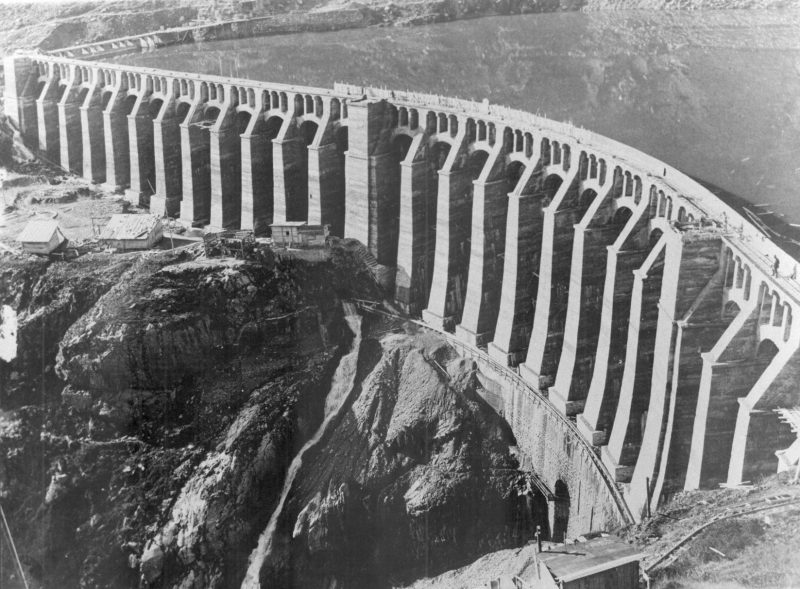 The dam completed in October 1923 – Gleno Archive
That Fateful December 1st…
The Gleno Disaster
On November 30, 1923, the reservoir was full again, with water reaching 38 meters. Leaks increased continuously, and boards were placed to prevent overflow.
Just after 7 a.m. on December 1, the dam caretaker noticed falling stones and a crack in one of the pillars. The crack rapidly widened, taking almost 80 of the dam’s 260 meters and releasing six million cubic meters of water.
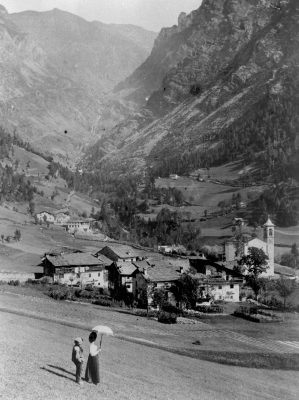 Bueggio before the disaster – Gleno Archive
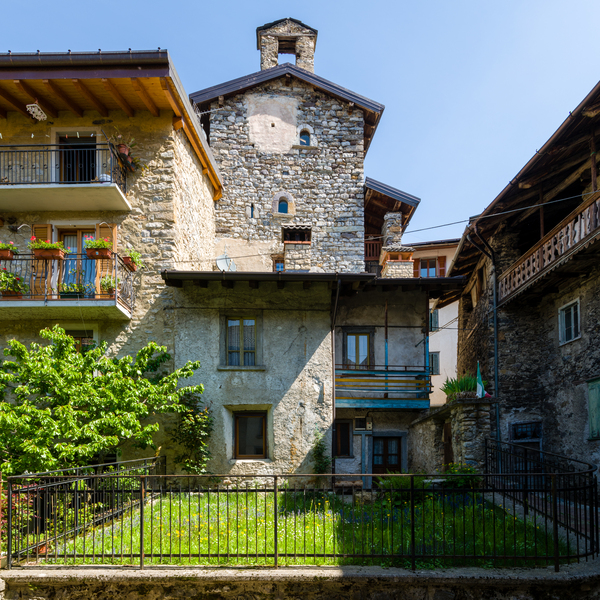
The destructive water first hit the village of Bueggio, even sweeping over the church. Dezzo suffered much worse, with the part facing Colere completely destroyed, including the Sanctuary of the Madonnina. Buildings under Azzone were partially protected by a rock outcrop.
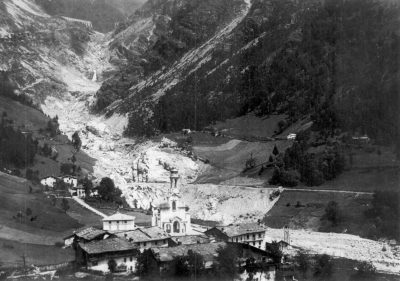 Bueggio some time after the disaster – Gleno Archive
The torrent of water and debris continued down the Dezzo gorge, reaching Valle Camonica and devastating Mazzunno, Angolo Terme, and Corna di Darfo Boario Terme, before finally pouring into Lake Iseo.
After the Disaster
Confirmed casualties were 359, though some estimates reach 500. Most deaths occurred in Dezzo and Corna. The disaster attracted international attention, including that of King Vittorio Emanuele III.
Investigations revealed that the collapse was caused by the failure of the central masonry, particularly at the plug. Poor construction practices, cost-cutting, and errors in design and supervision were also cited. Initial convictions were overturned on appeal due to insufficient evidence.
The Gleno Dam Disaster as recounted by survivors – produced by Comunità Montana di Scalve (2003). Directed by Davide Bassanesi.
To learn more about the dam’s history, visit the Gleno Exhibition Space in Vilminore di Scalve and explore the Gleno Archive, part of the project “Gleno – A Community of Heritage”.