

The forge of Teveno
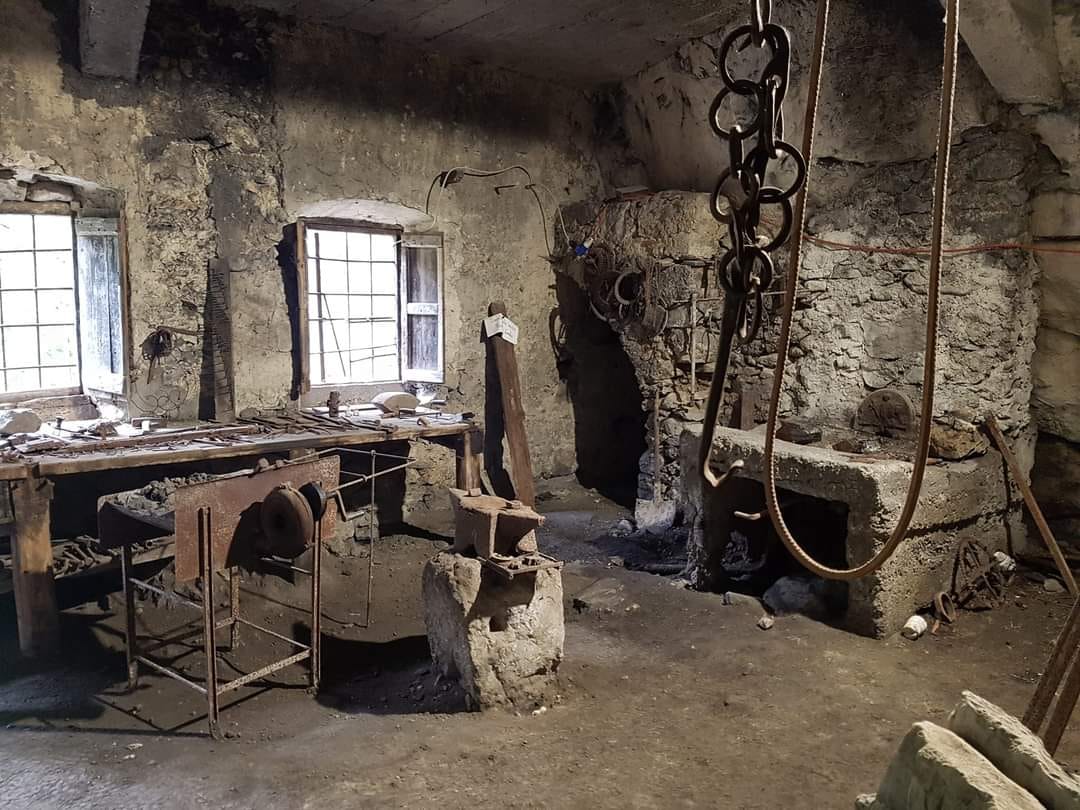
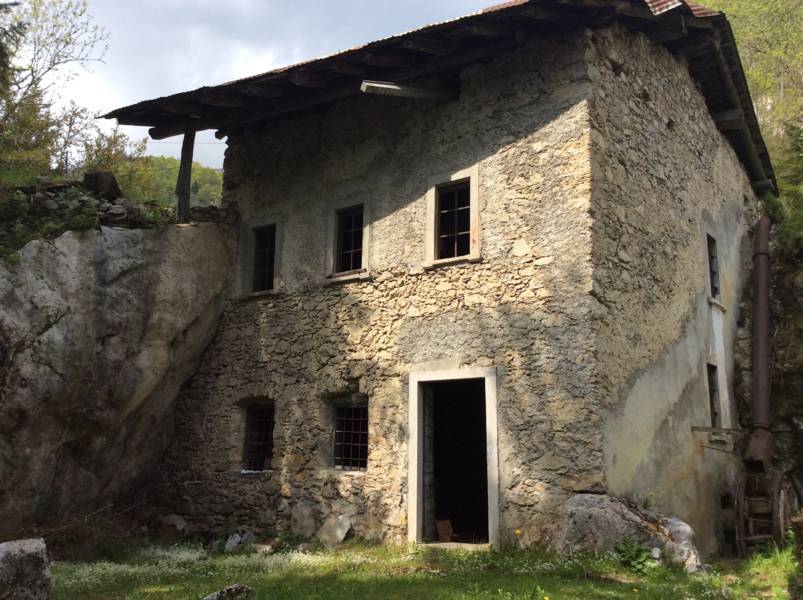
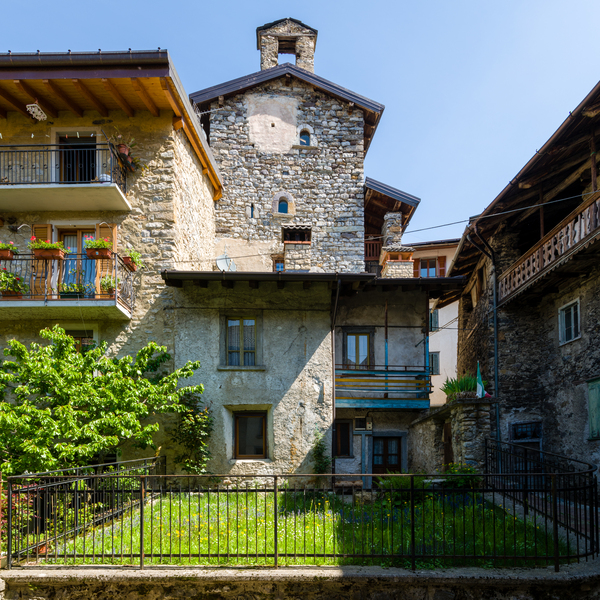
Fucina di Teveno represents the only surviving example of a finishing forge in the entire Val di Scalve, even though there were about 30 in the past.
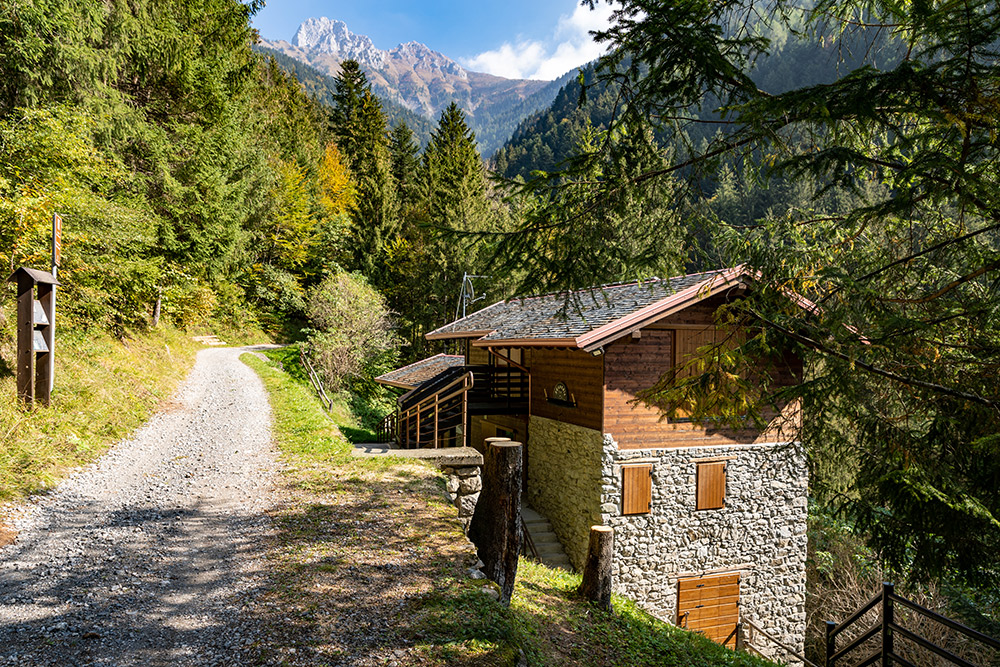
The forge is located on the ancient Valbona road, an important communication route between Valle Camonica (BS) and upper Val Seriana (BG); nearby, there was also a sawmill and a water-powered mill – together forming a kind of industrial district.
A Bit of History
The earliest documents mentioning the Fucina di Teveno date back to the early 1800s. Specifically, in 1833 it was owned by a certain Lorenzo Morzenti, a master blacksmith.
After that date, the forge likely remained closed, as no further records of its activity exist. The new owner – a woman named Fiorina Picini – didn’t even know the building belonged to her! Apparently, it was registered to her by mistake (from the act: “… building for use as a forge was erroneously registered to Ms. Picini Fiorina.“). In 1881, she decided to transfer ownership of the forge (with a proper deed) to Teresa Boni, wife of Giuseppe Arrigoni from Teveno (great-great-grandfather of the current owner, Fabio Morzenti).
Upon Giuseppe’s death, the forge passed to their son Cesare Arrigoni. From that moment, the forge resumed both repair and production activities. This is also evidenced by the tools being stamped with the acronym A.C. (the initials of the new owner): the quality of work at the Fucina di Teveno was well known throughout the valley and in neighboring areas.
After Cesare’s death, his children made structural and technological improvements to the equipment; they continued operations until the 1960s, when the forge was permanently closed.
What is a Finishing Forge?
It is a place where various objects were crafted from molten material; “crafting” refers to both production and possible repair.
Tools of medium or small size used in various trades of the time could be made, such as spades, hoes, shovels, chisels, nails, files… The Fucina also produced different types of nails, varying in size and characteristics according to their intended use.
Among the many mechanisms and tools visible in the forge, the centerpiece is undoubtedly the hydro-wind bellows, one of the very few remaining examples in Italy!
Invented by Master Leonardo da Vinci, the hydro-bellows was designed to eliminate cumbersome mechanical operations for the bellows: the pressure (i.e., airflow) generated by falling water was channeled to the forge to blow on the burning coal, providing the heat necessary to warm the iron.
The bellows is not currently operational but is in a very well-preserved state and constitutes the highlight of the entire redevelopment project.