

Church Cesulì
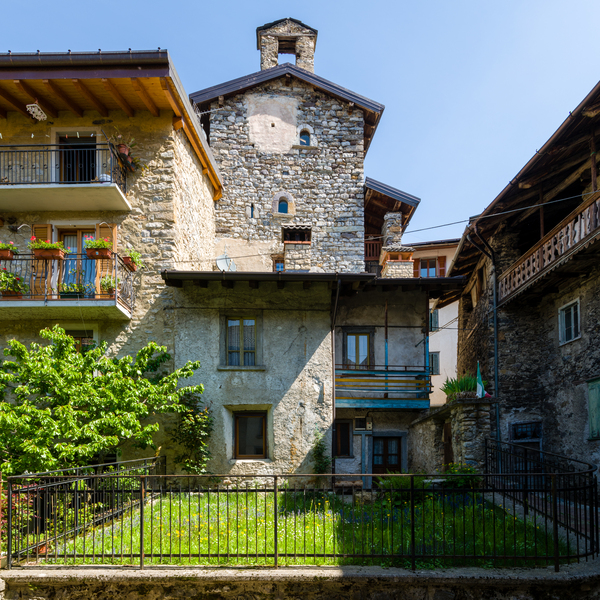
The ancient church and first parish church of the village was dedicated to Saint Bartholomew and is now commonly known as the “Cesulì”. It is a small stone building dating back to before 1459, when the “vicinia” of Colere became an անկախ parish separate from Vilminore di Scalve. It is likely that the original church corresponds to the presbytery bay, to which the current nave for the faithful was added in 1579, when Saint Charles Borromeo visited the building and recommended its restoration and expansion, as recorded in his report dated September 29 of that year. The date 1579 carved on the lintel of the main door recalls this renovation.
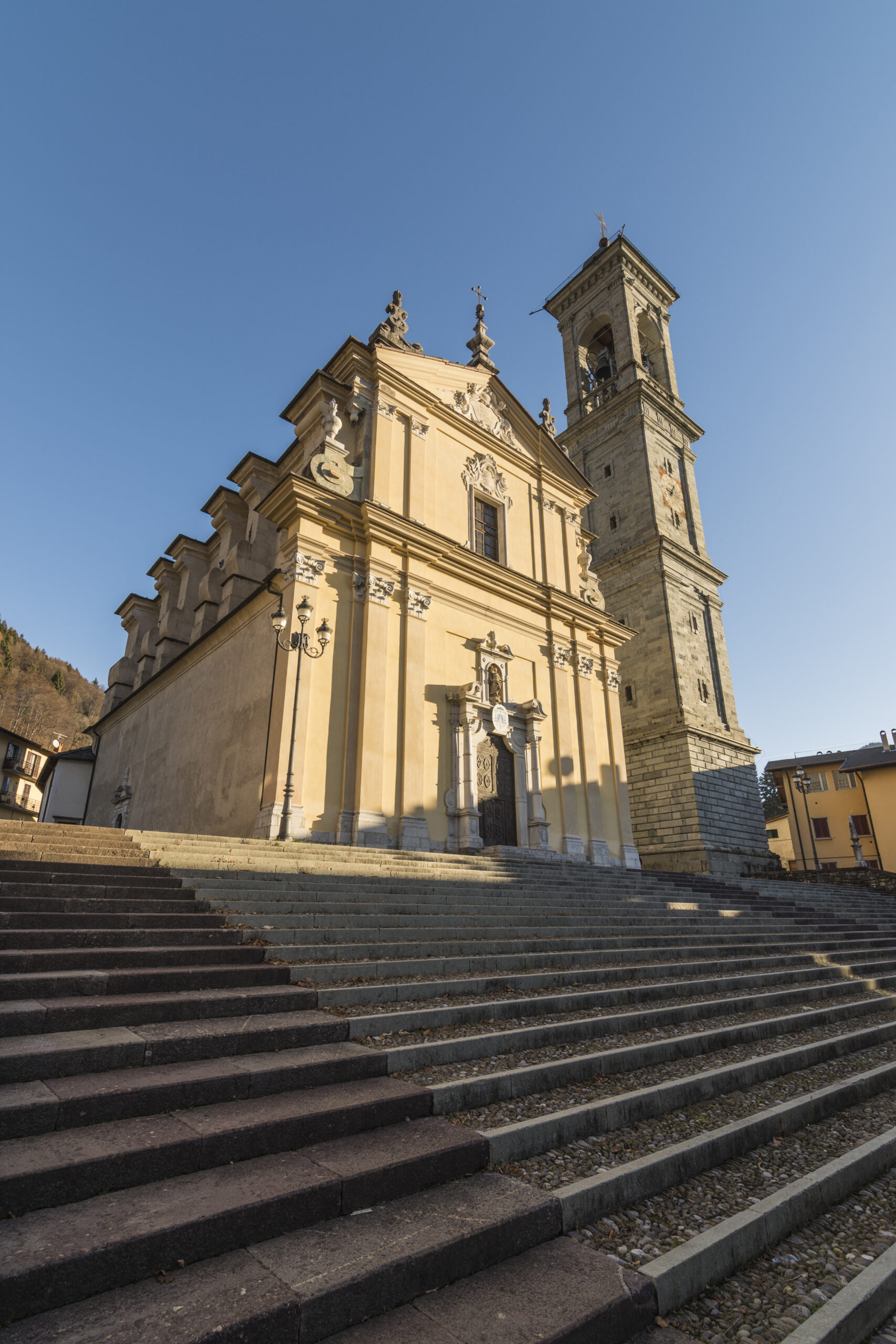
In the 18th century, the construction of a larger and more welcoming church became necessary, as parishioners were offering alms to churches in the hamlets while neglecting the parish church, which, according to the report of Bishop Ruzini dated October 7, 1700, was in need of repairs and affected by water infiltration. After a long dispute over whether to repair or demolish it, it was decided to build a new church in a more suitable location, at the center of the various hamlets. The map drawn to identify the site of the new building is displayed in the sacristy of the “Cesulì”.
Some workers began using stones from the “Cesulì” for the construction of the new building. On Sundays, however, some inhabitants from the hamlets of Gromo and Valle restored the old parish by bringing back the removed materials. In the following years, under penalty of excommunication, the bishop ordered the preservation of the medieval church, allowing only one Mass per year for the office of the dead, to pray in the place where the cemetery had stood for centuries, near the ancient church. For this reason, it is still called the “church of the dead”.
In the 1980s, the parish, the municipality, and the Alpini Group undertook the restoration of the building, which had long been abandoned. In the sacristy, photographs documenting the restoration work are displayed.
On April 27, 1985, the restored Cesulì was inaugurated. In 1990, the bell tower was also restored, again by the Alpini Group of Colere.
Inside, there are fragments of frescoes dating from the 15th to the 17th century, although for many of them only the sinopia (the preparatory drawing) is visible.
On the left wall of the presbytery, traces of saints in medieval clothing can be seen, along with fragments of an inscription identifying one of them, a Madonna with Child and saints, and a Madonna enthroned with Child framed by a distinctive interwoven decorative motif. On the right wall, traces of garments of saints can be seen, including possibly Saint Michael the Archangel, while on the central wall a Crucifixion can be glimpsed. Entering the sacristy, remnants of frescoes are visible, including possibly Saint Christopher with a staff above the door and Saint Lucy with eyes on a plate on the opposite wall.
Along the nave, on the left, there is a painting depicting the Madonna with Child on a cloud above, Saint Nicholas of Tolentino (with the book bearing his name, the lily, and the sun on his chest), Saint Roch showing the plague wound with a dog, and Saint Sebastian with arrows. The painting is attributed to Francesco Pagani and dated 1659.
On the right, there is a canvas depicting the Madonna with Saint Bartholomew inviting to adore the cross, Saint Jerome Emiliani (the two saints to whom the building is currently dedicated), Saint Roch, and the souls in purgatory below. The work was created by the artist Lattanzio Querena from Clusone in 1796, signed and dated just above the heads of the souls in purgatory.
Outside, in 1990, the artist Tomaso Pizio created a monument in bronze and concrete dedicated to victims of workplace accidents. Born in Schilpario in 1932, he studied at the Accademia Carrara in Bergamo under the guidance of Master Trento Longaretti and attended the International School of Graphics in Venice. He received numerous national and international awards before passing away in 2003. There is also a monument outside the church commemorating those who died in the mountains, specifically the ill-fated “Valdiscalve 81” expedition to the Peruvian Andes, in which three people from the valley lost their lives. The bronze plaque was created by the sculptor Zambetti from Sovere.
SOURCES:
www.prolococolere.it
Catalogue of movable cultural heritage, Diocese of Bergamo, Parish of Colere, 2002
Catalogue of immovable cultural heritage, Diocese of Bergamo, Parish of Colere, 2022
Eugenio Pedrini, Memorie di Comino e Pietro Morzenti 1729–1749